Autumn brings shorter days, darker journeys home and more time spent relying on artificial lighting around the property. It is also a useful point in the year to check whether your doors, windows, locks and security systems are working as they should.
A good autumn home security check does not need to involve major changes. In many homes, the most effective improvements start with simple maintenance, better lighting, secure habits and dealing with small faults before they become bigger problems.
At Page Security, we help homeowners with locks, UPVC doors and windows, burglar alarms, door entry systems and other security requirements. The checklist below is designed to help you review the main areas of your property and identify anything that may need attention before the darker evenings become part of your daily routine.
A seasonal check is also a good opportunity to think about how the property is actually used. The entrance you use every day may be secure, while a side door, patio door or rarely opened window has received less attention. Look at the property as a whole rather than relying on one strong front-door lock.
For households with children, house-sharers or frequent visitors, it is useful to agree on simple routines too. Everyone should know which doors need locking, when the alarm should be set and where keys should be kept.
Key Takeaways
- Check all external doors, locks and frames for stiffness, wear, damage or alignment problems before darker evenings become part of your daily routine.
- Inspect UPVC doors, patio doors and accessible windows, and avoid forcing handles or keys if a locking mechanism is becoming difficult to operate.
- Make sure outdoor lighting works around entrances, paths and side access, while trimming vegetation that reduces visibility around the property.
- Test your burglar alarm, secure sheds, garages and gates, and store ladders, tools and valuable equipment safely.
- Use simple evening habits such as locking doors and windows, setting the alarm and using timer-controlled lighting when you are away from home.
Did you know? Temperature changes can contribute to alignment problems in UPVC doors, so autumn is a useful time to check whether yours still locks smoothly.
Why Darker Evenings Change Your Home Security Routine
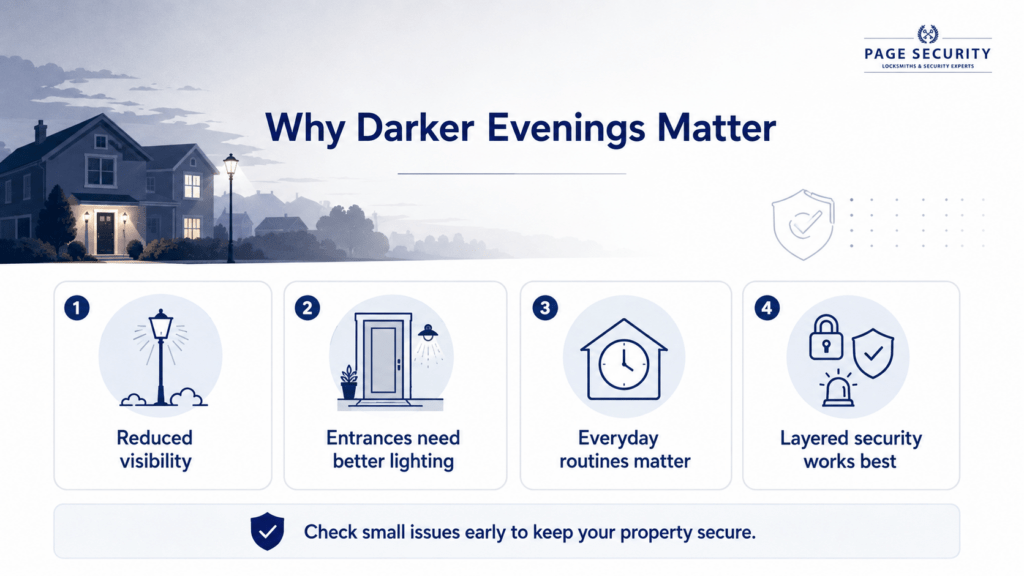
As daylight hours reduce, entrances, side paths and rear gardens can become harder to see. Outdoor lighting therefore becomes more important, both for visibility when you return home and as part of a wider security setup.
It is also worth thinking about what your home looks like from outside when you are away for an evening. A property that remains completely dark for several hours can look obviously unoccupied. Timer-controlled internal lighting can help create a more natural appearance when you are out.
Security works best in layers. Strong locks are important, but they are more effective when combined with sensible lighting, a working alarm, secure windows, clear sightlines and good everyday habits. If you want to strengthen your property without carrying out major building work, read our guidance on improving home security without major renovations.
Autumn Home Security Checklist at a Glance
Use this table as a quick starting point before carrying out a more detailed inspection.
| Area | What to check | Action to consider |
| Front and rear doors | Locks, handles, hinges, frames and closing action | Repair worn or unreliable locks and damaged hardware |
| UPVC doors | Stiff handles, sticking keys and alignment | Have persistent faults inspected rather than forcing the mechanism |
| Windows | Locks, catches and accessible openings | Repair faulty locks and close windows securely when leaving |
| Outdoor lighting | Entrances, paths, side access and rear doors | Replace failed bulbs and improve visibility where needed |
| Burglar alarm | Setting, sensors, batteries and fault warnings | Test the system and arrange repairs if faults appear |
| Gates and fences | Side and rear access | Keep gates closed and locked where appropriate |
| Shed and garage | Locks, tools, ladders, bikes and valuables | Secure access and store useful tools out of sight |
| Keys | Location and spare copies | Keep keys away from doors and windows and review unknown copies |
| Evening routine | Doors, windows, alarm and lighting | Build a quick security check into your routine before going out |
Check External Doors, Frames and Locks
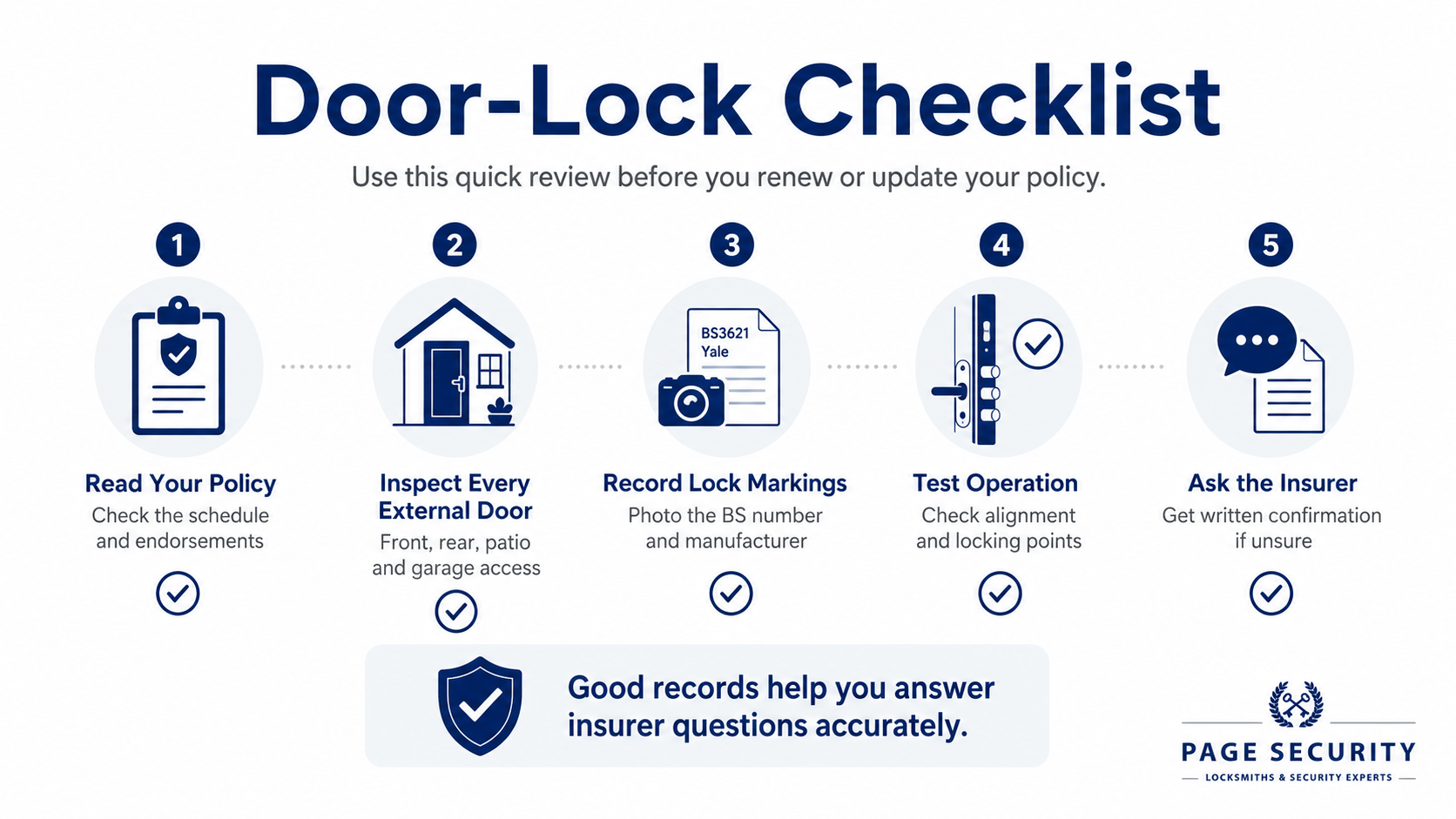
Start with every door that provides access to your home, not just the front door. Rear doors, side doors, garage-access doors and less frequently used entrances all deserve the same attention.
Open and close each door normally. The door should sit correctly within its frame and the lock should operate without excessive force. Pay attention to loose handles, movement around the lock, damaged frames and keys that have become difficult to turn.
Signs a Door or Lock Needs Attention
Look out for:
- a lock that regularly sticks or feels unusually stiff
- a key that only turns when the door is pushed, pulled or lifted
- handles that feel loose or do not return properly
- visible damage around the lock or frame
- a door that no longer closes cleanly
- locks for which you are unsure who may still have a key
A developing lock problem is easier to address while the door can still be opened and secured normally. If a lock is damaged, worn or unreliable, our lock replacement and lock repairs service can help identify the fault and recommend an appropriate repair or replacement.
If you have recently moved into a property, reviewing the external locks is also sensible because you may not know how many previous copies of the keys remain in circulation.
Inspect UPVC Doors, Patio Doors and Windows
UPVC doors can develop problems that are easy to dismiss at first. A handle may become stiff, a key may start catching or the door may only lock when pressure is applied in a particular direction.
Temperature changes, settlement and hinge wear can all contribute to alignment problems. When the locking points no longer line up correctly with the keeps in the frame, the mechanism can become harder to operate.
Do not repeatedly force a stiff handle or key. Extra force can place additional stress on the locking mechanism and may turn a relatively straightforward adjustment or repair into a more serious fault.
Check Your UPVC Doors For:
- handles that are becoming difficult to lift
- keys that stick or require excessive force
- doors that need to be pushed or pulled to lock
- gaps or uneven alignment around the frame
- locking points that do not engage smoothly
- signs of wear around hinges, handles or cylinders
Our guide to common UPVC door lock problems explains the typical warning signs in more detail. We also provide UPVC door and window repairs where a mechanism, lock, handle, hinge or alignment issue needs professional attention.
Patio doors and accessible windows should be included in the same check. Make sure they close correctly, their locks operate normally and they are secured whenever the property is left empty.
Improve Outdoor Lighting and Visibility
Lighting is particularly important once you begin arriving home after dark. Check the areas around your front door, rear entrance, pathways and side access to make sure you can see clearly and that failed bulbs have not created unnecessarily dark areas.
Security lighting can be useful around entrances and other appropriate locations. Motion-activated lighting is one option, while carefully positioned fixed lighting may suit some properties better.
Vegetation also affects visibility. Bushes, hedges or climbing plants that obscure doors, windows or lighting can reduce sightlines around the property. Autumn is a good time to trim back overgrowth where it creates an obvious blind spot.
Inside the home, timer-controlled lighting can be useful when you expect to be out after dark. Rather than leaving the entire property dark, timers can switch selected lights on and off at appropriate times.
Lighting should not be treated as a replacement for secure doors, windows or alarms. It is most useful as one part of a layered security approach.
Test Your Burglar Alarm Before the Nights Draw In
A burglar alarm is only useful if it is operating properly. If you have not tested yours for some time, autumn is a sensible opportunity to make sure the system is ready for regular use.
Check that the alarm sets and unsets as expected and that sensors respond correctly. Look for battery warnings, error messages or other fault indications on the control panel. If your system uses keyholders or stored contact information, make sure those details are still current.
You should also make sure everyone in the household understands how to use the alarm properly. A system that is frequently left unset because people are unsure of the code or procedure is not providing the protection it was installed for.
Page Security installs and repairs wired and wireless burglar alarms. If your existing system is showing a fault, is unreliable or no longer suits the way you use your property, our burglar alarm installation and repairs service can help.
Secure Sheds, Garages, Gates and Side Access
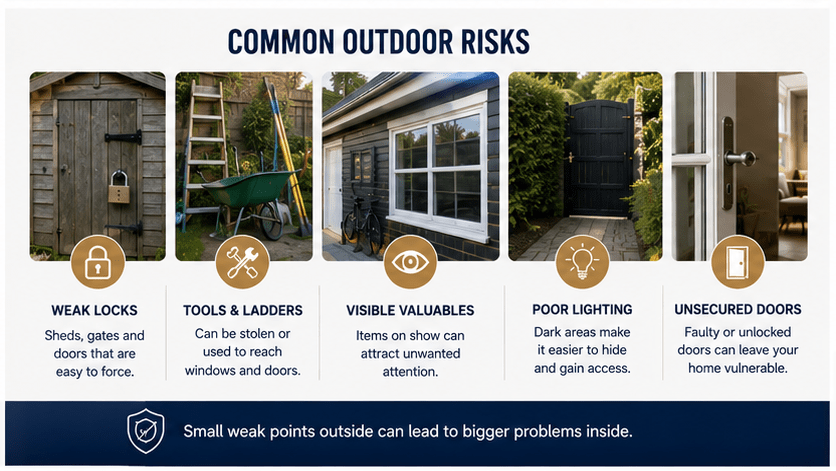
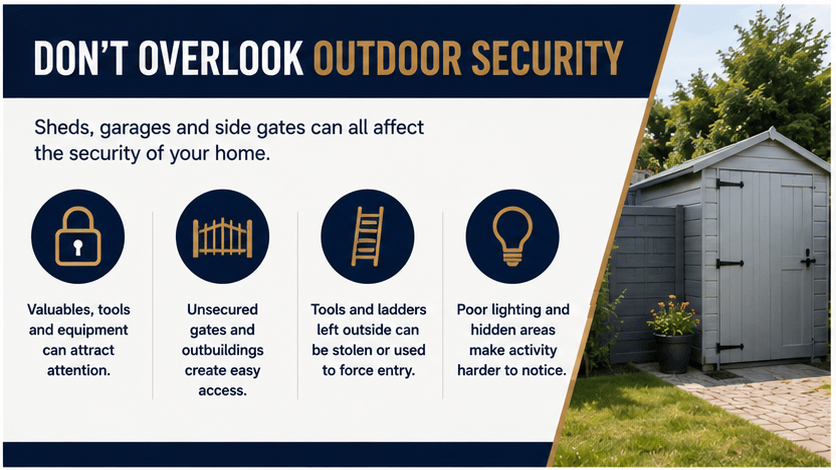
Home security extends beyond the walls of the house. Side gates, sheds and garages can provide access to valuable items, while unsecured tools or ladders may also create additional opportunities around the property.
Walk around the outside of your home and check that gates close properly and can be secured where appropriate. Inspect shed and garage locks, particularly if they have become stiff, loose or weathered.
Keep tools, ladders and other useful equipment securely stored rather than leaving them in an accessible garden or passageway. Bikes and higher-value equipment should also be secured appropriately.
Consider what can be seen from outside. Expensive tools or equipment that are clearly visible through a garage or shed window may be better moved out of sight.
If a door, lock or frame has already been damaged during an attempted or successful break-in, our burglary prevention and repairs service covers repair and reinforcement options for affected properties.
Make Your Home Look Occupied on Dark Evenings
Evening routines matter more once darkness arrives earlier. If you regularly return home after dark, a few simple habits can help ensure your property does not look unattended.
Consider using timer-controlled lighting in one or two occupied rooms when you are out. Avoid leaving keys on display near doors or windows, and do not leave accessible windows open when the property is empty.
Before leaving, take a few seconds to confirm that:
- external doors are properly locked
- accessible windows are closed and secured
- the burglar alarm is set if you have one
- gates, sheds and garages are secured
- keys are not visible or within easy reach
- selected internal lights are timed if you will return after dark
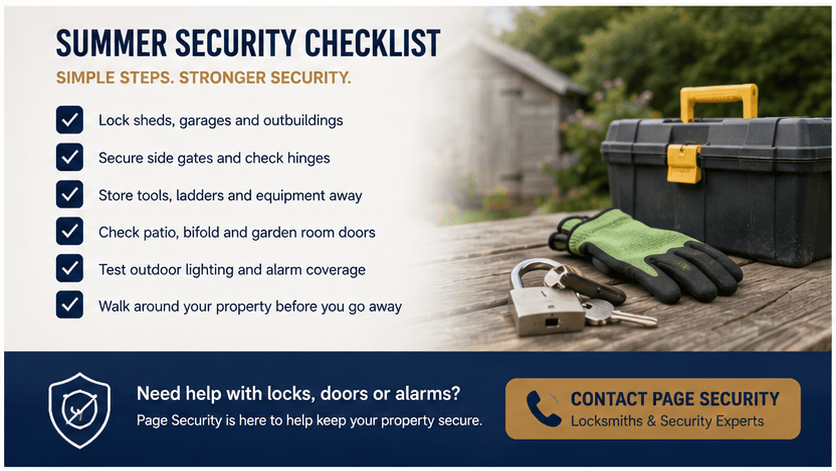
For longer absences, holidays or weekends away, our summer home security checklist contains additional advice on preparing a property before you leave.
Live in a Flat? Check the Communal Entrance
If you live in a flat or converted building, your own front door is only one part of the security picture. The communal entrance is the first controlled access point for everyone in the building.
Check that the main entrance closes and locks correctly behind residents. Do not allow unknown visitors to follow you into the building simply because you are entering at the same time, and avoid releasing the door for somebody you cannot identify.
If the building uses an entry phone, keypad or fob system, report faults rather than assuming somebody else will deal with them.
Page Security installs and repairs door entry systems, including audio, video, keypad and proximity solutions. We also provide access control systems for properties that require controlled entry using codes, cards, fobs or related methods.
Your Final 10-Minute Autumn Home Security Check
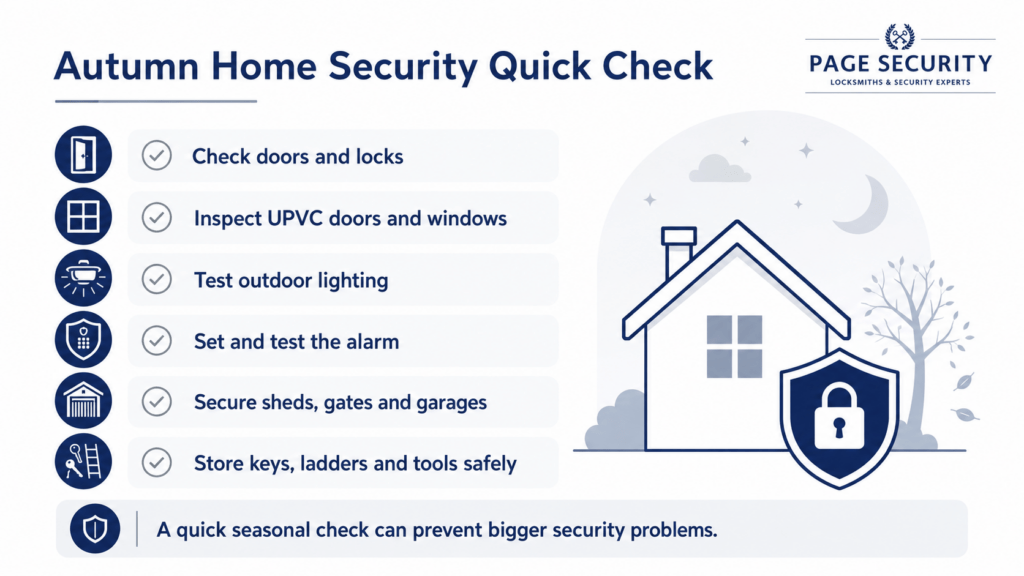
Once you have completed the main inspection, use this shorter checklist as a regular reminder throughout autumn:
- Lock all external doors properly.
- Check accessible windows are closed and secure.
- Make sure UPVC doors lock without being forced.
- Confirm outside lights are working.
- Set the burglar alarm when leaving.
- Secure side gates, sheds and garages.
- Put ladders and tools away.
- Keep keys away from doors and windows.
- Use timer lighting when appropriate.
- Deal with developing lock, door or alarm faults before they become more disruptive.
A regular check can be particularly useful after changes to household routines, building work or the arrival of colder weather.
Need Help Getting Your Property Ready for Autumn?
Small security faults are worth dealing with before they leave you unable to lock a door, secure a window or use your alarm properly.
At Page Security, we provide lock replacement and repairs, UPVC door and window repairs, burglar alarm installation and repairs, burglary repairs, door entry systems and access control solutions.
If you have noticed a stiff lock, misaligned UPVC door, alarm fault or another security concern, contact Page Security to discuss the problem and arrange professional assistance.