

Choosing between a night latch and a deadlock is one of the most common questions homeowners ask when reviewing front door security. Both locks can be useful, but they do different jobs. A night latch is usually chosen for convenience, while a deadlock is usually chosen for stronger security.
For many timber front doors, the best answer is not always one or the other. A well-secured front door may use both a good quality night latch and a suitable mortice deadlock. For UPVC and composite doors, the right solution is often different again, because these doors usually rely on a multipoint locking system.
This guide explains the difference between a night latch and a deadlock, where each one works best, and when to call a professional locksmith for advice.
Quick Answer: Which Lock Is Best for a Front Door?
A deadlock is generally the stronger security lock, especially when it is a British Standard 5 lever mortice deadlock fitted correctly into a suitable timber door. A night latch is usually the more convenient lock, because it can latch automatically when the door closes.
For many wooden front doors, a strong setup is:
- A quality night latch for day-to-day convenience
- A suitable mortice deadlock for added security
- A sound door frame and correctly fitted keep
- Insurance-compliant locks where required
A standard night latch should not usually be treated as the only lock on a front door. A British Standard night latch may be suitable in some cases, but it depends on the door, the property, and any insurance requirements.
For UPVC and composite doors, the right answer is usually not a night latch or mortice deadlock. These doors commonly use multipoint locking systems, which need to be checked, repaired or upgraded in a different way.
For professional advice, Page Security can help with locksmith services in London and surrounding areas.
Key Takeaways
- A night latch is convenient for day-to-day use because it can latch automatically when the door closes.
- A deadlock is usually the stronger security lock, especially when it is a suitable British Standard mortice deadlock on a timber front door.
- Many wooden front doors benefit from both a night latch and a deadlock, giving a balance of convenience and security.
- UPVC and composite doors usually rely on multipoint locking systems rather than traditional night latches or mortice deadlocks.
- Insurance wording matters, so it is always worth checking whether your policy asks for a BS3621 lock, 5 lever mortice lock or multipoint locking system.
Did you know? A basic night latch may be convenient, but it should not usually be treated as the only lock on a front door.
What Is a Night Latch?
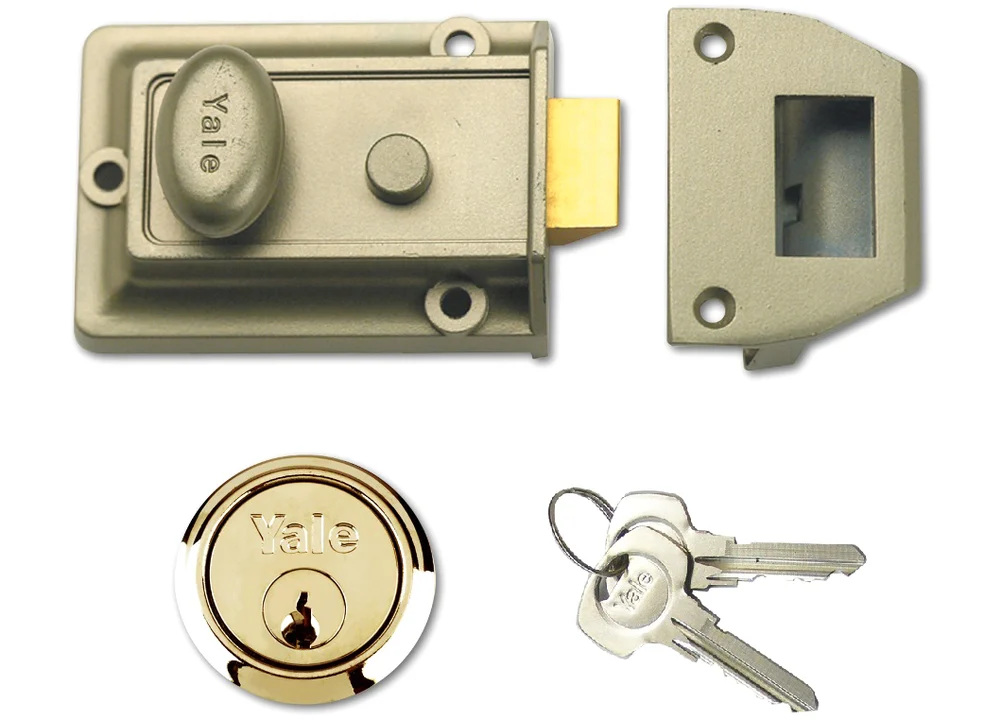
A night latch is a lock commonly fitted to the inside face of a timber door. Many people call it a Yale lock, although Yale is a brand name rather than the name of the lock type.
A typical night latch has a cylinder on the outside of the door and a latch case on the inside. When the door closes, the latch can engage automatically. This makes it convenient for day-to-day use because the door can latch behind you without needing to turn a key.
Night latches are often found on:
- Timber front doors
- Flat entrance doors
- Some communal entrance doors
- Side doors
- Older residential properties
There are different types of night latch, including standard night latches, deadlocking night latches, auto-deadlocking night latches and British Standard night latches. This matters because a basic night latch is very different from a high-security British Standard model.
The main advantage of a night latch is convenience. The main disadvantage is that a basic model may not offer enough protection as the only lock on a front door. It can also increase the chance of being locked out if the door closes behind you and your keys are inside.
If your building has a shared entrance, it is also worth reading our guide to locks for communal doors.
What Is a Deadlock?

A deadlock is a lock that uses a solid bolt rather than a spring latch. On a wooden front door, this is usually a mortice deadlock, which is fitted into a pocket cut into the edge of the door.
A mortice deadlock is operated by a key. Unlike a night latch, it does not automatically latch when the door closes. You must lock it deliberately. This can make it less convenient, but it also makes it a strong security option when fitted correctly.
A 5 lever mortice deadlock is a common choice for external timber doors. Many insurers refer to British Standard locks, so a BS3621 mortice deadlock is often recommended where a wooden external door needs to meet insurance requirements.
The key difference is simple:
- A night latch helps the door latch during everyday use.
- A deadlock adds a stronger bolt when the door is properly locked.
A deadlock is only effective if it is used. If a front door has a deadlock but the household only relies on the night latch, the property may not be as secure as it should be.
You can read more about lock standards in our guide to insurance requirements for wooden doors.
Night Latch vs Deadlock: Main Differences
The table below compares the two lock types in practical terms.
| Feature | Night Latch | Deadlock |
| Main purpose | Convenience and day-to-day access control | Stronger security when locked |
| Automatically latches | Usually yes | No |
| Common door type | Timber doors | Timber doors |
| Operation | Key outside, internal handle or thumb turn inside depending on model | Key operated |
| Security level | Depends heavily on model and fitting | Usually stronger when British Standard rated |
| Lockout risk | Higher if the door closes behind you | Lower unless keys are lost |
| Best use | Secondary or convenience lock | Main security lock |
| Insurance suitability | Depends on model and policy wording | Often relevant for timber external doors |
| Fire escape considerations | Depends on internal operation | Can be an issue if a key is needed from inside |
A night latch is useful because it makes the door easy to use. It is ideal for a busy household where people come and go throughout the day. However, that same convenience can cause problems if the door closes with the keys inside.
A deadlock is less convenient because it must be manually locked and unlocked. However, it usually provides stronger resistance to forced entry, especially when it is properly fitted into a solid timber door with a secure frame.
If you have been locked out because the door closed behind you, see our guide: Locked Out of Your House in London?
Pros and Cons of a Night Latch

Advantages of a Night Latch
A night latch is popular because it is simple and convenient. It allows the door to latch when closed, which can be helpful when you are carrying shopping, dealing with children, or leaving the house in a hurry.
Key benefits include:
- Quick to use
- Convenient for everyday access
- Can latch automatically
- Familiar to many UK households
- Available in higher-security British Standard versions
- Useful as part of a two-lock setup on timber doors
A night latch can work well as the lock you use most during the day, particularly when paired with a stronger deadlock for overnight security or when leaving the property empty.
Disadvantages of a Night Latch
The main weakness of a night latch is that not all models provide the same security. A basic night latch may not be suitable as the only front door lock, especially if the door is on an external entrance.
Possible drawbacks include:
- Increased risk of accidental lockouts
- Basic models may not meet insurance requirements
- Security depends on the lock quality and fitting
- The door frame and keep must be strong enough
- Older locks may be worn or poorly aligned
If your front door only has an old or basic night latch, it may be worth asking a locksmith to check whether an upgrade is needed.
Pros and Cons of a Deadlock
Advantages of a Deadlock
A deadlock is designed for security. When the bolt is thrown into the keep, it gives the door stronger resistance than a basic latch. This is why mortice deadlocks are commonly fitted to wooden external doors.
Key benefits include:
- Strong physical locking point
- Good resistance when fitted correctly
- Often suitable for external timber doors
- Less risk of the door locking behind you
- Useful overnight or when the property is empty
- Works well alongside a night latch
A British Standard mortice deadlock can be a strong choice for a timber front door, provided the door itself is suitable. The lock, frame and keep all need to work together.
Disadvantages of a Deadlock
A deadlock is not as convenient as a night latch. It will not secure the door automatically, so it only works when someone remembers to lock it.
Potential drawbacks include:
- Must be locked manually
- Less convenient for frequent use
- May require a key to exit, depending on the setup
- Incorrect fitting can weaken the door
- Not suitable for every door type
- Can create escape concerns in some buildings
Deadlocks should be chosen carefully for flats, HMOs, rental properties and communal doors. Security is important, but residents must also be able to escape safely in an emergency.
Which Lock Is More Secure?

In most cases, a good quality deadlock is more secure than a basic night latch. A deadlock uses a solid bolt, while a basic night latch relies on a latch mechanism. However, the quality of the lock and installation makes a major difference.
A British Standard night latch may be more secure than a cheap or badly fitted deadlock. Similarly, a high-quality mortice deadlock can perform poorly if it is installed into a weak or damaged door.
When assessing front door security, look beyond the lock itself. The following all matter:
- Door thickness and condition
- Door frame strength
- Quality of the keep
- Hinge condition
- Lock standard
- Cylinder protection
- Letter plate position
- Glass panels near the lock
- Whether the lock is actually used
Burglars may attack the weakest part of the door, not necessarily the lock. A strong lock fitted into a weak frame will not give the same protection as a properly installed lock in a solid, well-maintained door.
If your door or frame has been damaged, our guide on what to do after a break-in explains the steps to take.
What Do Insurers Usually Expect?
Insurance policies vary, so it is important to check your own policy wording rather than relying on general advice. Many policies refer to British Standard locks for external doors, particularly on timber doors.
For wooden external doors, insurers may ask for one of the following:
- A British Standard lock conforming to BS3621
- A 5 lever mortice deadlock
- A suitable multipoint locking system
- A suitable British Standard night latch
A standard night latch may not meet insurance requirements unless it is a suitable British Standard model. If your policy states that locks must conform to BS3621, you should check the lock for the correct markings or ask a locksmith to identify it.
It is also sensible to review your locks when you move into a new property. You may not know who still has a copy of the keys. This is also important for landlords after tenants move out.
Before upgrading a lock, check:
- The type of door
- Your insurance policy wording
- Whether the current lock has a British Standard mark
- Whether the door frame is strong enough
- Whether safe exit is affected
Page Security can help assess existing locks and recommend practical upgrades.
Should You Have Both a Night Latch and a Deadlock?
For many timber front doors, having both a night latch and a deadlock is a sensible option. Each lock has a different role.
A night latch gives convenience. It helps the door latch during normal daily use, which is helpful when people are coming and going.
A deadlock gives added security. It is the lock you should use when leaving the property empty or securing the door at night.
A common timber door setup is:
- Night latch at a convenient height for everyday use
- Mortice deadlock fitted lower down as the main security lock
- Properly fitted keep and strike plate
- Lock standards checked against insurance requirements
In some cases, locks can be keyed alike, meaning one key can operate more than one lock. This depends on the lock type and setup, so it needs to be checked by a locksmith.
The right combination depends on the door. A timber front door, UPVC door, flat entrance door, communal entrance and rental property can all require different solutions.
What About UPVC and Composite Front Doors?
UPVC and composite doors are different from traditional timber doors. They usually do not use a standard mortice deadlock or night latch. Instead, they commonly rely on a multipoint locking system.
A multipoint locking system can include:
- A euro cylinder
- Gearbox
- Locking strip
- Hooks
- Rollers
- Bolts
- Keeps in the frame
If your UPVC door handle feels stiff, the key sticks, or the door needs to be lifted to lock, there may be an alignment issue or a problem with the gearbox or mechanism. Ignoring these warning signs can lead to a lockout, broken key or failed mechanism.
For UPVC and composite doors, the best upgrade may be a suitable cylinder, mechanism repair or realignment rather than adding a night latch or deadlock.
See our guide to UPVC door lock problems for more detail.
Fire Safety and Escape Considerations
A front door lock must do two things well. It must help keep intruders out, but it must also allow people to leave safely when needed.
This is especially important in:
- Flats
- HMOs
- Rental properties
- Communal entrances
- Buildings with shared escape routes
A lock that requires a key from the inside may create a safety issue in some situations. A thumb turn or suitable escape function may be needed depending on the property, door type and use.
Do not fit a lock that could trap occupants during an emergency. Landlords, freeholders and managing agents should take professional advice before changing locks on communal or shared doors.
For more information, read our guide to locks for communal doors.
When Should You Upgrade Your Front Door Lock?
Locks often show warning signs before they fail. Acting early can prevent lockouts, snapped keys and security problems.
You should consider a lock upgrade or inspection if:
- The lock is old, loose, rusty or stiff
- The key sticks or turns poorly
- The door only has a basic night latch
- You have moved into a new property
- You have lost your keys
- A tenant has moved out
- There has been a break-in or attempted break-in
- The door or frame is damaged
- Your insurer has asked for a specific lock standard
- The door does not shut or lock smoothly
- You want fewer keys for the property
A locksmith can check whether the problem is the lock, cylinder, door alignment, frame, hinges or mechanism. In some cases, an adjustment is enough. In other cases, replacing the lock is the safer option.
Can You Fit a Night Latch or Deadlock Yourself?
Some homeowners consider fitting locks themselves, but the quality of installation has a direct effect on security.
A night latch may look simple to fit, but the cylinder, latch case and keep all need to line up properly. A mortice deadlock requires cutting into the door. If too much timber is removed, or the lock is positioned badly, the door can be weakened.
Professional fitting is especially important for:
- Older timber doors
- Thin doors
- Fire doors
- Flat entrance doors
- Communal doors
- Doors that already have damage
- Doors with unusual measurements
A locksmith can recommend the correct lock type, size, backset, cylinder and fitting method. This helps avoid poor alignment, weak fixing points and locks that do not meet the required standard.
Best Lock Setup by Door Type
Wooden Front Door
A suitable timber front door will often benefit from a British Standard night latch and a BS3621 mortice deadlock. The frame, keep and hinges should also be checked.
UPVC Front Door
A UPVC front door usually needs the multipoint locking system, cylinder, alignment and gearbox checked. A traditional night latch or mortice deadlock is not usually the answer.
Composite Front Door
Composite doors commonly use multipoint locking systems. A suitable high-security cylinder and correctly working mechanism are usually more relevant than adding timber door locks.
Flat Entrance Door
Flat entrance doors need careful consideration. Fire safety, escape, lease requirements, door certification and insurance wording can all affect the right lock choice.
Communal Door
A communal door must balance security, safe escape and daily access. If access control is needed, see our door entry systems service.
Final Verdict: Night Latch or Deadlock?
A night latch is best for convenience. A deadlock is best for stronger security. For many timber front doors, the best solution is both, provided the door is suitable and the locks are fitted correctly.
For UPVC and composite doors, a multipoint locking system is usually the main security feature, so repairs or upgrades should focus on the mechanism, cylinder and alignment.
Before changing a front door lock, check your door type, insurance wording and escape requirements. A properly fitted lock should make your home more secure without making it awkward or unsafe to use.
If you are unsure which lock is best, contact Page Security for practical locksmith advice.
FAQs

Is a night latch enough for a front door?
A basic night latch is not usually enough as the only front door lock. A British Standard night latch may be suitable in some cases, but many timber front doors benefit from a mortice deadlock as well.
Is a deadlock better than a night latch?
For security, a good quality deadlock is usually better than a basic night latch. For convenience, a night latch is usually easier to use day to day.
Do I need a British Standard lock for insurance?
Many policies refer to British Standard locks, but requirements vary. Check your own policy wording and ask your insurer if you are unsure.
Can a locksmith fit both locks on the same door?
Yes, in many cases. A locksmith can check the door thickness, frame condition, spacing and lock compatibility before fitting both locks.
What is the difference between a deadlock and a sash lock?
A deadlock has a bolt only and is operated by a key. A sash lock usually has both a latch and a deadbolt, and is commonly used with door handles.
Why does my night latch keep sticking?
It may be caused by wear, poor alignment, loose fittings, a faulty cylinder, or movement in the door or frame. A locksmith can inspect the lock and advise whether it needs adjustment or replacement.
Should I change my locks when I move house?
Yes, it is sensible to change or rekey locks when moving into a new property. You may not know how many previous keys exist or who has them.
Further Reading
- Stay Insured With the Right House Locks: An insurance-focused guide from Allianz explaining why door lock types and policy wording matter for home insurance.
- What Door Locks Do I Need for My Insurance to Be Valid?: A MoneySuperMarket guide explaining how home insurance policies may refer to lock types and security requirements.
